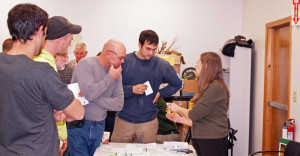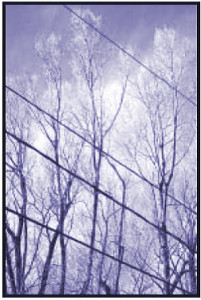
The Tree Wardens’ Association of Connecticut, Inc. is sponsoring a workshop on Tree Work Safety on Thursday, October 6, 2016 at White Memorial in Litchfield, CT. CEUs are being issued in many disciplines for DEEP, Forest Practitioners, ISA and BCMA. Workshop modules include equipment and storm safety, electrical awareness and live demonstrations. Presenters include Bud Neal, Eversource, UI, Asplundh and Lewis Tree Service. For more information or a registration form, please visit the website at www.cttreewardens.org
FREE Nursery & Landscape Research Tour
The Connecticut Agricultural Experiment Station is holding a free Nursery & Landscape Tour on September 15, 2016 at the Valley Laboratory, 153 Cook Hill Road in Windsor, CT. Registration begins at 8:30 am. There will be a walking tour followed by indoor talks. The day will adjourn at 1pm with 3.25 Pesticide Re-certification Credits being given.
Please click here to print out the agenda.
Emerald Ash Borer Workshop – Monroe
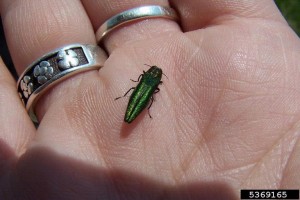
Is EAB a threat? Are you willing to bet your ash?
On September 22, 2016, The CTPA will hold a full day workshop and field tour on the Emerald Ash Borer (EAB). This workshop will take place in Monroe and will run from 8 am to 3 pm.
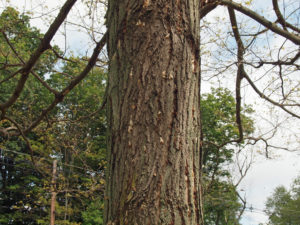
Arborists, tree wardens foresters, forest practitioners, and all tree and landscape professionals are invited to attend, along with anyone with an interest in the health of our trees and forests. In the course of the day, attendees will learn about the biology of the insect and the means by which it attacks ash trees. They will also first hear about and then see in the field the indicators of an emerald ash borer infestation, and about the options available to protect ask trees from EAB.
Attendees should meet at the Monroe Fire House – Station #1, 18 Shelton Road (Rte 110), Monroe
The speakers include:
Chris Donnelly, CT State Urban Forester, speaking on the regulatory response to EAB
Dr. Claire Rutledge, Entomologist at the CT Agricultural Experiment Station, speaking on the biology of EAB.
Dr. Richard Cowles, Entomologist at the CT Agricultural Experiment Station, speaking on how EAB affects trees and the mechanisms by which pesticides protect ask trees from EAB.
There will be a field tour that will demonstrate the use of pesticides and visits to infested trees, to see directly the effect EAB has on these trees. Peeling stations will be set up so that people have a chance to see an emerald ash borer within a tree.
Attendees should register in advance with CTPA. The cost of attending is $45 for CTPA members and $55 for non-members. Monroe residence are invited to attend and a donation of $20 to cover lunch and refreshments is requested.
CEU’s :CT Arborist Lic. 3D/6, ISA /6, Forest Practicioner/2, TCIA CTSP/3.5, Tree Wardens Advanced Certified/6
If you have any questions, please call the office at (203)484-2512 or cathy@ctpa.org

Two Articles Regarding the Emerald Ash Borer
Included are links to two articles regarding the emerald ash borer that arborists, tree workers and tree wardens should find useful.
The first article is entitled The Economics of Dying Ash Trees in Connecticut and was put together by Dr. Rich Cowles of the Connecticut Agricultural Experiment Station. This informal discussion piece reviews various strategies that municipalities might consider in the face of EAB. Essentially, the article suggests that the use of insecticides may be much more affordable for EAB control than people give them credit for, including in the municipal setting.. The article is intended to introduce the topic and not be a full exploration. It can be very helpful reading for anyone considering how to manage public ash trees within the State of Connecticut.
Dr. Cowles will be speaking at the CTPA Summer Meeting on Thursday, July 21. During this talk, he will reference ideas brought forward in this short article.
The second article, called Dead Ash Tree Removal? Think Twice!, is reprinted from the Summer 2016 edition of the CTPA newsletter and is written by Emmett Shutts of Shutts Tree Service. In this article, Emmett explores some of the safety concerns relating to ash trees that have been heavily infested or killed by the EAB. Research alongside of experience finds that these trees pose an increased and often unanticipated safety risk, especially to tree care workers charged with their removal. It is reprinted here in order to allow this article to be easily forwarded to others who might be interested.
Record Mortality for the Hemlock Woolly Adelgid During This Past Winter
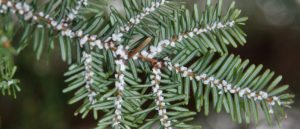
As reported by Dr. Carole Cheah of the Connecticut Agricultural Experiment Station, the hemlock woolly adelgid population in Connecticut suffered its highest rate of mortality this past winter in 16 years of record-keeping. Along the shore, average mortality was nearly 95%, while it the northwest corner of the state, mortality approached 100%.
Dr. Cheah presents these observations, along with comparisons with the results of previous years, in a Station fact sheet entitled, “HWA Winter Mortality in Connecticut & Implications for Management and Control“. This fact sheet can be found through the publications page on the Station web site (www.ct.gov/caes), under fact sheets and then under pdf’s.
Dr. Cheah describes two factors as contributing to this record-breaking die-off. Primarily, it was the extreme cold that arrived as part of a mid-February polar vortex and that affected the whole state. Also, because the winter had been mild previous to this cold snap, there was little snow accumulation within the tree canopy, and so the insects had little protection from the cold. She also includes the observation that, again due to the previous mild weather, many of the insects that were killed were at a later stage in their development.
Throughout the fact sheet, Dr. Cheah takes note of the various management implications that arise from these observations.
In a related note, Dr. Kirby Stafford has updated the gypsy moth fact sheet to include information from this current year. This fact sheet is available on the CAES web site as well.
Dr. Cheah will be attending the CTPA Summer Meeting on Thursday, July 21, along with several other Station Scientists – so please, register to attend the meeting and come with your questions, your own observations regarding trees, insects and diseases, and also any samples you might wish to discuss with these researchers.

CTPA ‘Go to the Top’ Survey
The CTPA would like to hear from its members regarding the ‘Go to the Top’ campaign it initiated earlier this year. Using Survey Monkey software, we have put together a short survey that we invite you as a member to fill out. It should not take long – we figure less than 10 minutes. Through the survey, we are trying to do two things. We would like your feedback regarding the messages behind the Go to the Top campaign. Also, we are interested in hearing from you the extent to which you, as members, are willing to get involved in this campaign.
This post is just a follow-up of the email sent last week – it takes you to the exact same survey as linked in that email. The Public Relations Committee, led by Allan Fenner, has put a lot of time into this campaign and this survey, so your input is very much appreciated. We also look forward to learning a great deal. This will help us keep this campaign moving forward.
Please Click Here to Take the Survey
For those of you who may have lost track of the ‘Go to the Top’ campaign, we encourage you to take a look at this earlier post on the subject. Essentially, the purpose of the campaign is to reach out to the public, in order to help them recognize the value of the arborist license and the benefit, to them, of hiring a licensed arborist. We are still in the early stages, although we do have a logo and are pulling together a plan.
So, please help us by filling out the survey. We request that all responses be submitted by August 5th – but why wait?
Thank you.
The Passing of Bob Knapp
This past Friday, the CTPA lost one of its long time members with the passing of Richard W. “Bob” Knapp of West Redding. Bob was 84 when he died, and leaves behind his wife of 62 years, Betty, his four sons and three daughters, plus many additional relatives – daughters- and sons-in-law, grandkids, friends and relatives. He will be missed by many people. He was predeceased by one son, Thomas.
Bob founded not just one but two tree care companies, both of which are still in business. Knapp Brothers Inc. was founded by Bob along with his brother Joe in 1954 and is still run by Bob’s nephew Dayle. Later, Bob founded Knapp Tree Incorporated, which is run by his sons Edward and Andrew. All 3 – Andrew, Edward and Dayle – are licensed arborists and members of CTPA.
Besides being a true professional, Bob contributed to those around him in many other ways – as a serviceman in the Korean War, as a volunteer fireman in Redding and as a town assessor and volunteer with his church and various social organizations.
The wake for Bob will be held at Kane Funeral Home in Ridgefield on Wednesday, June 22 from 4 to 8 pm. The funeral services will be held on Thursday, June 23, at 11 am, at the First Church of Christ, Congregational, in Redding.
Bob’s obituary was published in the Danbury News-Times.
White Pine Decline and Gypsy Moths

White Pine Damage.
The two tree health questions everyone has been asking this late spring are:
A visit to the Connecticut Agricultural Experiment Station in New Haven helped towards providing answers to these two questions.
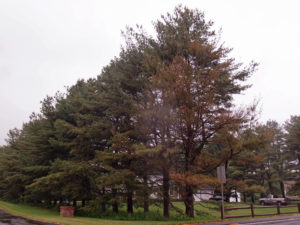
White Pine Decline. A recent report by Dr. Nick Brazee of the University of Massachusetts summarized his observations regarding the condition of many white pines throughout southern New England. On many of these trees, the needles, especially the older needles are turning tan or yellow and otherwise showing the symptoms of a needlecast disease. Affected trees are widespread throughout the landscape and throughout the region.
In this report, Dr. Brazee identifies four fungi that are associated with this condition, 3 of which are fairly well-known in the region and a 4th, Septorioides strobi, that is a newcomer. However, Dr. Brazee suggests that it is not so much the presence of the fungi that is causing the problem; the trigger is the weather conditions over these past couple of years, especially the very dry conditions of 2015.
In the Plant Diseases Information Office at the CAES in New Haven, the findings of Dr. Yonghao Li and Ms. Lindsay Patrick are generally in concurrence with Dr. Brazee’s summary. The same disease fungi have been found in this state, including Septorioides, identified in CT last year. Yonghao and Lindsay also agree that the weather patterns of the past couple of years have a major role to play in what is occurring.
However, the PDIO cautions that there still may be more to the story. For instance, the weather patterns throughout New England have shown local variation. As one example, while last June was very wet in much of New England, it was still relatively dry in southern Connecticut. Also, symptoms of needlecast have begun to show up on this year’s needles, suggesting lingering effects that might go beyond just last year’s weather.
In fact, this general issue of ‘white pine decline’ has been under discussion in New England for the past several years, as shown in a 2012 pest alert from the US Forest Service on white pine damage.
Dr. Li and the PDIO office is very interested in hearing further from arborists from around the state concerning their observations regarding the conditions on eastern white pine. Besides the needlecast diseases, PDIO would be interested in whether other diseases are becoming more noticeable, such as pitch canker, a pine disease that affects the bark, branches and other parts of the trees.
Meantime, Dr. Li recommends people look to Dr. Sharon Douglas’s excellent guide, Disease Management Guide for Connecticut Arborists 2015-16, available through CTPA’s website. A printed version of this publication is also available through the CTPA office.
People who wish to contact the PDIO may visit the PDIO website (www.ct.gov/caes/pdio) or call 203-974-8601.
Diagnostic services are also available at CAES’s Valley Lab in Windsor. That office may be contacted at 860-683-4977.
Gypsy Moth. About now, people in the south-central and eastern parts of Connecticut are beginning to ask – what is going on with the gypsy moths? For many, this question is a refrain from last year, when many of those same parts of the state witnessed defoliation due to gypsy moth on an order not seen for several years. The number of gypsy moth caterpillars that people are noticing this year – hanging from branches, scattering frass over car hoods and roofs and showing up on people’s clothing after working outside – are a direct consequence of the dry spring and early summer of last year. The question for this year is whether the intensity of last year’s outbreak will be repeated.

Gypsy Moth Outbreak 2015, Northford CT
Dr. Gale Ridge in the Insect Information Office at CAES suggests that the situation will be much better this year than last. The missing actor in 2015, which Gale expects to return in full force this year, is the maimaiga fungus. Last year’s June rains came too late and even then, not everywhere, to adequately derail the 2015 outbreak. As a result, we had significant defoliation in much of the state last year, with enough gypsy moths surviving to adulthood and reproducing to set the stage for this year.
The key to all if this is moisture, or its absence, especially in the leaf litter. Moisture triggers the fungal resting spores of maimaiga in the leaf litter to release, while the high local humidity helps the growing fungus to penetrate the larval insect’s cuticle. In the later instars, especially the 4th and 5th instars, the gypsy moth caterpillar becomes a commuter, as Dr. Ridge’s describes it, stopping feeding during the heat of the day to seek cooler temperatures at base of the tree. As they do this, while in the leaf litter, a certain number of the caterpillars will contract the fungus and die as they climb back up the tree, their bodies bursting open to release conidial spores that can directly affect other gypsy moth larvae. These conidial spores are short-lived but, towards the end of the gypsy moth larval period, the fungus switches to producing the persistent resting spores that can begin the control of future generations of gypsy moths.
Dr. Ridge expects that people in areas with high numbers of gypsy moths can expect to see the characteristic hanging cadavers of fungal-killed gypsy moth larvae within the next 10 days or so. While some has already occurred, it is normally in the last two instars that the greatest damage is seen. Gail, along with most of the rest of us, is hoping that this will not happen, as the maimaiga fungus stops the fungus in its tracks.
For a very good, pre-maimaiga overview of the gypsy moth life-cycle, see the Gypsy Moth Handbook.
Fall 2016 Arboriculture 101
Arboriculture 101 is a course given by the CTPA two times a year for those wishing to advance in the field of arboriculture and to prepare for the Connecticut Arborist License exam. It is given one night a week for thirteen weeks. Each class session is 3 hours in length.
The Fall 2016 session of Arboriculture 101 will begin on Wednesday, September 7

Christina Berger instructs students on the proper use of pesticides, including regulations and safety concerns.
and will take place at CTPA HQ in Wallingford. Attendees must have registered in advance of the first class.
Summer Meeting 2016
- « Previous Page
- 1
- …
- 19
- 20
- 21
- 22
- 23
- …
- 25
- Next Page »
The Summer Meeting is July 21, 2016. There will be plenty of food, vendors and educational workshops. Come spend the day!