There is a bill before the legislature that may be of interest to arborists and other members of CTPA – particularly those people looking to take the Arborist Licensing Exam. The bill is HB 5454.
A little bit of background. During the special session on the State Budget last fall, a provision was included in the legislation that essential required DEEP and the Department of Agriculture to act on almost all licenses and permits within 90 days of the receipt of an application, or else the application would be automatically accepted. So, for instance, take the case of an individual who applied for an arborist license on March 1st and who then took the written exam on March 15 and passed it. Currently, the next tree id and oral exam would not be held until early June – past the 90 days since the receipt of the application.
In this situation, DEEP would be left with only two choices – pass the person without giving him or her the tree id and oral exam, or fail him or her without giving him the additional exams. Neither choice is a good one. DEEP, along with the Tree Protection Examining Board, has been working on a solution that is in accord with this new law.
Since the law went into effect immediately upon passage, DEEP and the Tree Protection Examining Board have had to react quickly and with limited opportunity to soften the impact of the change required. As things stand right now:
- People who apply for the written exam must pay attention to the when the next tree id and oral exams will be given. Applicants will be assigned to the next written exam and, if they then cannot take the tree id or oral exam in time, they fail. (The scheduling process is now centralized in DEEP and so there is less discretion as to when people can be assigned a test date – and almost no opportunity to refund fees once paid.)
- People who pass the written exam will be assigned to the next scheduled tree id and oral exam. Right now, these are scheduled only 4 times a year. In a departure from past practice, each applicant will only have one opportunity to pass the tree id or oral exam – if they fail one or the other, then their application is rejected without an opportunity to retake either one. Also, if an applicant is a no-show for a test date, he or she is given a failure.
- Once people fail the tree id or oral exam, they have to start all over again with a re-taking of the written exam. This includes repayment of the $200 application fee.
The bill presently before the legislature, HB 5454, would repeal this 90 day requirement for the arborist license exam as well as most other professional exams given by DEEP (the 90 day requirement is now in effect for all pesticide supervisory exams, for forest practitioner exams and licensed environmental professional exam, among others). It is not a complete repeal of all that now falls under the 90 day requirement due to the budget law. Under HB 5454, there would be modifications of the current law, with certain features of the current version to remain, particularly as relate to specific permits.
The CTPA Board tends to favor the repeal of the 90 day requirement for the Arborist License and a return to the old system under which this license has been issued. It has not taken a position on the full provisions of either the current legislation as was passed in the budget bill, or on the provisions in HB 5454.
To gain a better understanding of the issues involved, CTPA members are encouraged to read the testimony submitted on this bill. In particular, the testimony of the DEEP Commissioner and that of the Connecticut Environmental Council, of which CTPA is a member, are very interesting and informative.
CTPA members and others who have strong views on this issue are encouraged to contact their local state legislators.
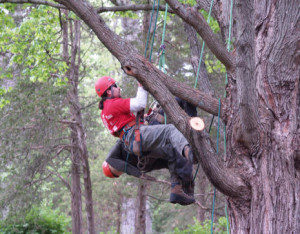 Each year, 25-30 climbers, men and women, participate in a competition that showcases the skill, safety, insight and knowledge that is all a part of climbing trees professionally. The event also showcases the camaraderie, spirit and overall sense of fun that is also a part of this unique group of skilled individuals.
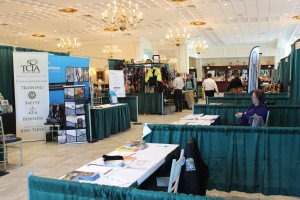 Please join us for our 96th Annual Meeting, Thursday, January 18, 2018 at the Aqua Turf Club in Plantsville, CT. We have a great line-up of speakers (Dr. Gerorge Hudler from Cornell University and Tim Walsh from The Davey Tree Expert Company, our always packed trade show and, of course, an excellent lunch. /The following CEU’s are available at the end of the day: CT DEEP 2A/2.0, 3A/4.25 CEU’s, CT Forest Practitioner/2.0 CEU’s, ISA Certification/3.75 CEU’s, TCIA CTSP/1.0 CEU’s and Advanced Certified Tree Wardens’/4.25 CEU’s.
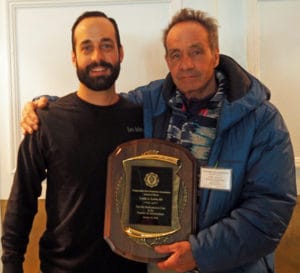
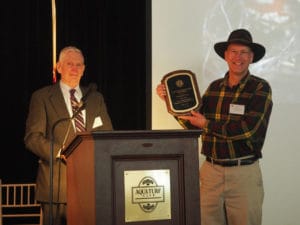
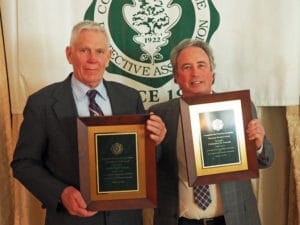
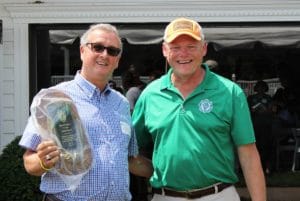 The Connecticut Tree Protective Association regularly honors individuals who have made significant contributions to arboriculture and to the care and protection of Connecticut’s trees. These awards are given annually and presented at the Annual Meeting. The CTPA Board of Directors is requesting nominees for awards for the upcoming Annual Meeting on January 18, 2018 and encourages you to nominate someone whom you feel deserves special recognition.
